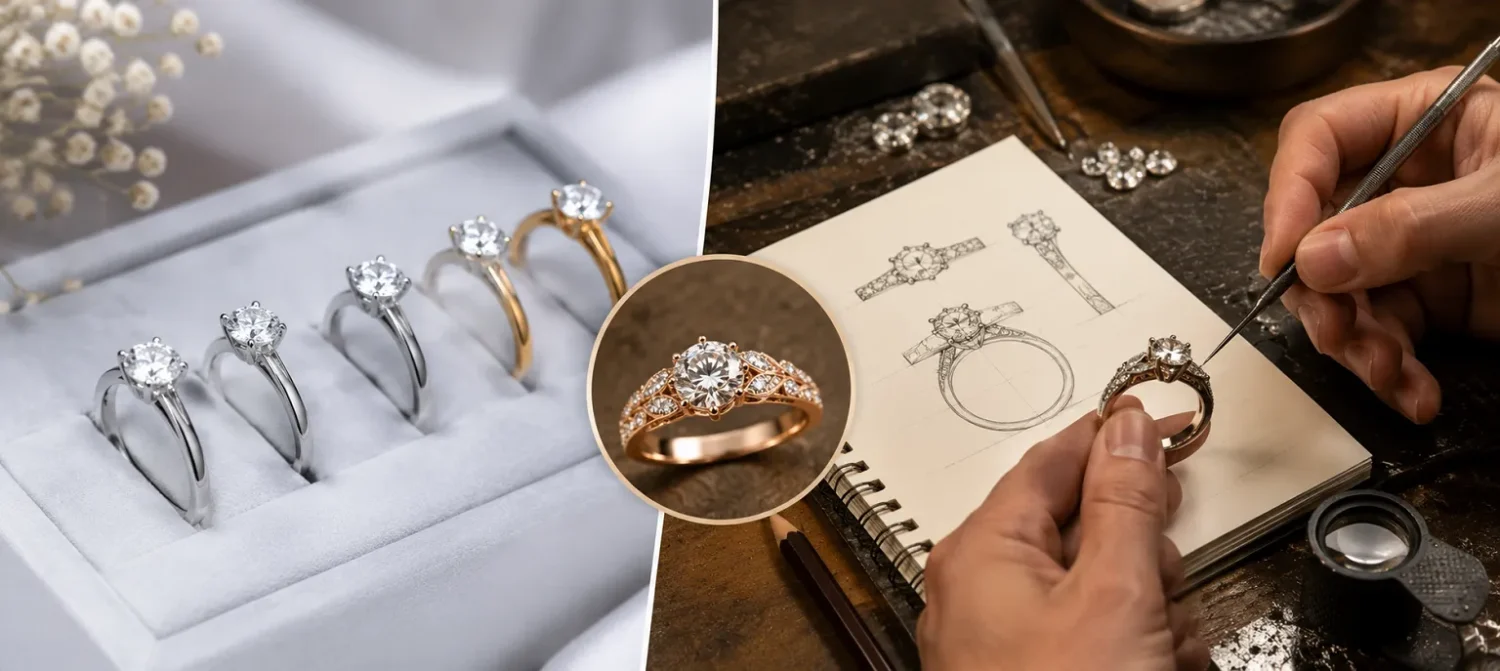
If you’re planning to ask a reputable jeweller to create a custom-designed personal adornment, a diamond is usually the centrepiece. Before he sets that stone into a bespoke ring or pendant, it’s worth understanding a critical document: the diamond certificate.
Key Takeaways
- A diamond certificate provides independent verification, documenting key characteristics such as cut, colour, clarity and carat weight.
- Certification helps buyers understand exactly what they are purchasing, providing an objective assessment rather than relying solely on a jeweller’s description.
- Reputable gemological laboratories issue diamond grading reports, helping establish transparency and confidence in a diamond’s quality.
- The certificate can support comparisons between diamonds, making it easier to assess differences in quality, characteristics and pricing.
- Certification is particularly valuable for significant purchases, giving buyers documented information they can retain for insurance, resale or future reference.
This guide explains what a diamond certificate is, the information it contains, and its significance when investing in customised, elegant Gold Coast engagement rings rather than buying something off a shelf.
Diamond Certificates Defined
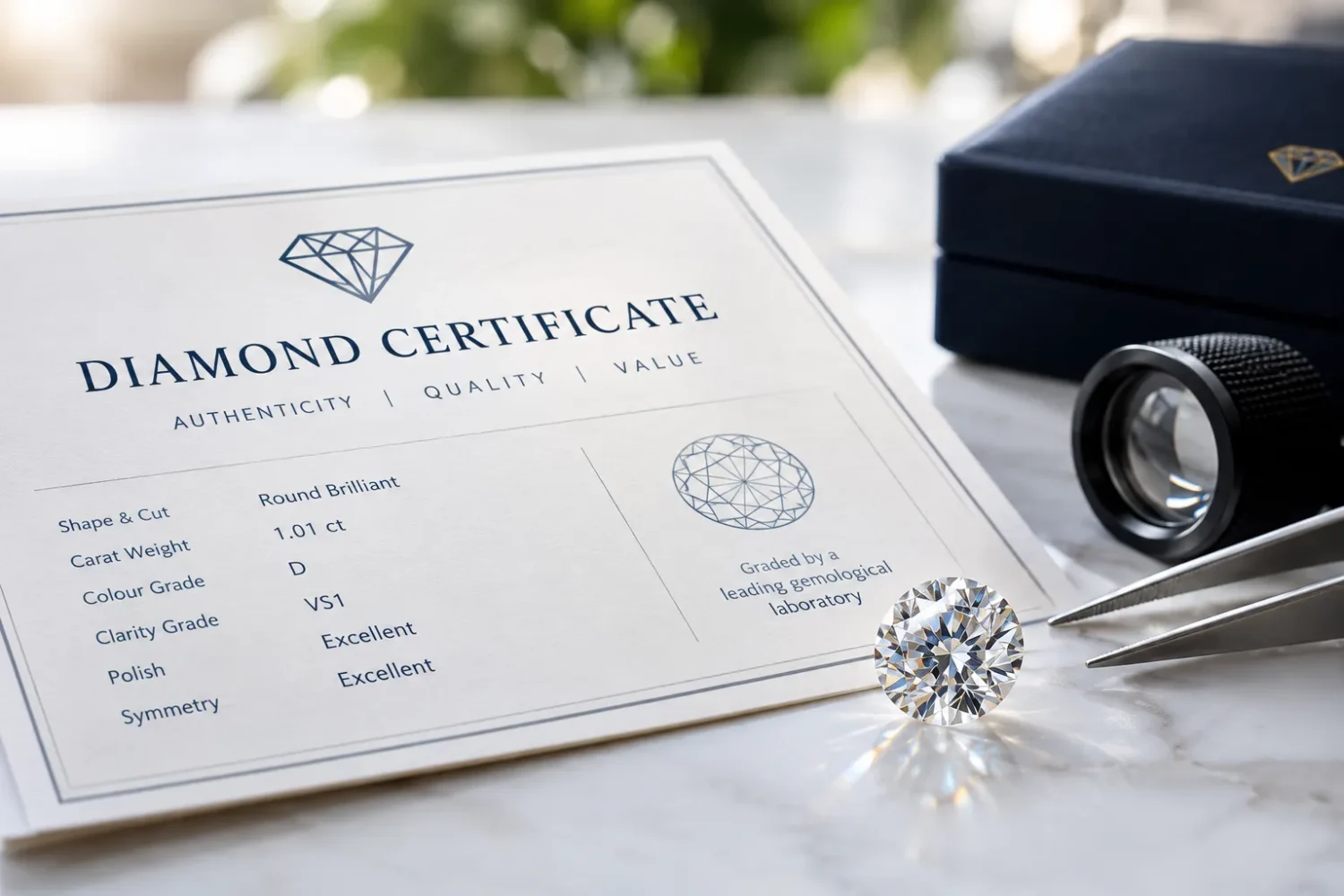
A diamond certificate or grading report is a document produced by an independent gemmological laboratory after evaluating a diamond in detail. The lab records the stone’s carat weight, cut, colour, and clarity (often referred to together as the four Cs), along with measurements, including its proportions, symmetry, and polish. Some certificates also note fluorescence, which is how a diamond reacts under ultraviolet light.
Your diamond certificate provides you with an independent, written record of the stone’s qualities and dimensions, ensuring that you receive a high-quality, elegant stone and a high return on investment.
Why Diamond Certificates Matter With Custom Jewellery
When you buy a ready-made piece from a display case, you can compare it side by side with similar rings and get a feel for value. It’s important to remember that custom jewellery doesn’t work that way—trusted jewellers often ask you to choose a diamond based on a description, a photo, or a quick look under a loupe before setting it into the ring. There’s no shelf with comparable pieces standing next to your bespoke bridal jewellery.
Your diamond certificate becomes your independent reference point, confirming that the stone that a respected jeweller shows you and the diamond in your custom piece are the same.
Reputable jewellers will always provide one for a diamond of any real size or value, and a trusted one won’t mind you asking questions about it before committing. For this reason, we encourage you to ask relevant questions to instil confidence in your purchase and gain long-term peace of mind.
Who Issues Diamond Certificates?
Not all diamond certificates have the same significance. As a highly experienced jeweller on the Gold Coast, we recommend considering Independent laboratories with no financial interest in selling you the stone. These labs employ trained gemmologists who assess each diamond using consistent, established standards, meaning a diamond graded in 2026 should be assessed the same way it would’ve been graded five years earlier.
Certificates issued by the retailer itself rather than an independent lab also deserve consideration. It’s important to remember that not every in-house assessment is unreliable; rather, there’s a considerable difference between a seller grading their own stock and a separate laboratory doing the same job with no financial interest in the outcome.
Diamond Certificate Vs. Diamond Appraisal
Many jewellery enthusiasts confuse diamond certificates and diamond appraisals. It’s worth noting that they serve different purposes.
A diamond certificate describes the diamond itself, including its physical and optical characteristics, without attaching a dollar figure to it. On the other hand, a diamond appraisal (usually done after the piece is finished) estimates its value for insurance purposes and takes into account the setting, the metal, and current market prices.
For example, a grading report might indicate that a diamond is a 1.00 carat, G colour, and VS1 clarity. On the other hand, a diamond appraisal may assign a specific monetary value to the diamond or bespoke engagement ring.
It’s important to note that both documents are critical for a custom piece. The certificate protects you at the point of purchase, confirming what you’re buying. The appraisal protects you afterwards, making sure your insurance policy reflects what the finished piece is actually worth.
The Financial Stakes Are High
Custom diamond jewellery is rarely a small purchase, and Australian data backs that up. According to Easy Weddings’ 2025 Australian Wedding Report, the average amount spent on an engagement ring was $6,492, with around one in five buyers spending more than $10,000. With that much on the line, a certificate isn’t a nice extra. It’s simply due diligence.
When investing a substantial amount for a custom diamond, relying solely on a jeweller’s description may provide only limited information about your purchase. A grading report from a trusted gemmological laboratory provides an objective record of a diamond’s characteristics, allowing you to verify its carat weight, colour, clarity, and cut. This information makes it easier to compare diamonds, understand where the specifications match the jeweller’s description, and make an informed purchasing decision.
Working With Your Jeweller
When you sit down with a jeweller to design a custom piece, ask upfront which laboratory will certify the diamond and about the certificate. A highly experienced and respected artisan such as Finelines Jewellers will typically discuss every detail found in the report, explaining what each figure means for the look and value of your finished piece rather than leaving you to figure everything out yourself.
We recommend ensuring that the certificate number is engraved or laser-inscribed on the diamond’s girdle where possible. This small detail lets you match the physical stone to its paperwork at any point in the future, which matters if you ever need to have the piece valued, insured, or serviced.
Commissioning a custom piece should be an exciting process, not an anxious one. A diamond certificate takes the guesswork out of the equation, giving you the confidence that the stone going into your design is exactly what you were told it would be.
At Finelines Jewellers, we’re happy to answer any relevant questions about your diamond certificate. Book an appointment today to explore our sophisticated diamond range and create your perfect custom engagement ring.
Frequently Asked Questions (FAQs)
1. Is a diamond certificate the same as a receipt?
A diamond certificate is different from a receipt. The latter confirms your purchase and price paid, while the former is an independent report on the diamond’s physical characteristics, produced by a gemmological laboratory before or separate from the sale itself.
2. Do small diamonds need a certificate?
Very small accent stones often don’t come individually certified, as the cost can outweigh the value. However, the main or feature diamond in a custom piece should always be certified.
3. Can I trust a diamond certificate provided by the jeweller?
We recommend trusting the laboratory, not the seller. Look for certificates from recognised independent labs rather than documents generated in-house, since independence is what makes the grading reliable.
4. Does a certificate guarantee the diamond’s value?
A diamond certificate describes the diamond’s characteristics, not its dollar value. For value, you need a separate appraisal, usually completed once the piece is set and finished.
5. What happens if a diamond has no certificate?
It doesn’t necessarily mean the diamond is a problem, but it removes your independent point of reference. Ask your jeweller to arrange certification before you commit, especially for a feature stone.