Wearing gold or silver jewellery complements your appearance and makes you look more stylish. Whether strolling through the local park, attending a formal gala, or delivering a business presentation, well-chosen jewellery can truly make a difference.
At Finelines Jewellery, we recommend timely cleaning and maintenance to ensure your jewellery retains its lustre and sparkle. Your earrings, necklaces, bracelets, and custom-made pieces need proper care. Otherwise, they can lose their visual appeal, sustain long-term damage, reduce resale or insurance value, and require higher repair costs over time. Taking proactive steps can help you prevent these scenarios and enjoy great value for money.
Key Takeawys
- Regular cleaning removes oils, dust, soap residue, and buildup that can dull jewellery and reduce its long-term value.
- Gold jewellery can usually be cleaned with warm water, mild dish soap, and a soft brush, depending on wear frequency.
- Silver jewellery needs more frequent care because it tarnishes easily and should be dried thoroughly after cleaning.
- Harsh chemicals, abrasive products, toothpaste, and bleach should be avoided as they may scratch or damage metals and stones.
- Professional jewellers are recommended for stubborn tarnish, loose gemstones, visible wear, or delicate pieces needing specialist care.
This blog explains how to maintain the shine of gold and silver jewellery, offering timely insights to ensure the longevity and lustre of your statement pieces.
Jewellery Cleaning: An Overview
Cleaning jewellery helps maintain its appearance, durability, and long-term value. Pieces worn frequently are exposed to skin oils, dust, perfume, pollutants, and soap residue, which can compromise their lustre and brilliance.
Regular jewellery cleaning helps:
- Restore shine and sparkle.
- Prevent long-term dirt accumulation.
- Significantly reduce the risk of long-term damage.
- Maintain hygiene by eliminating bacteria and residue.
- Preserve their long-term resale and insurance value.
Common DIY Jewellery Cleaning Methods
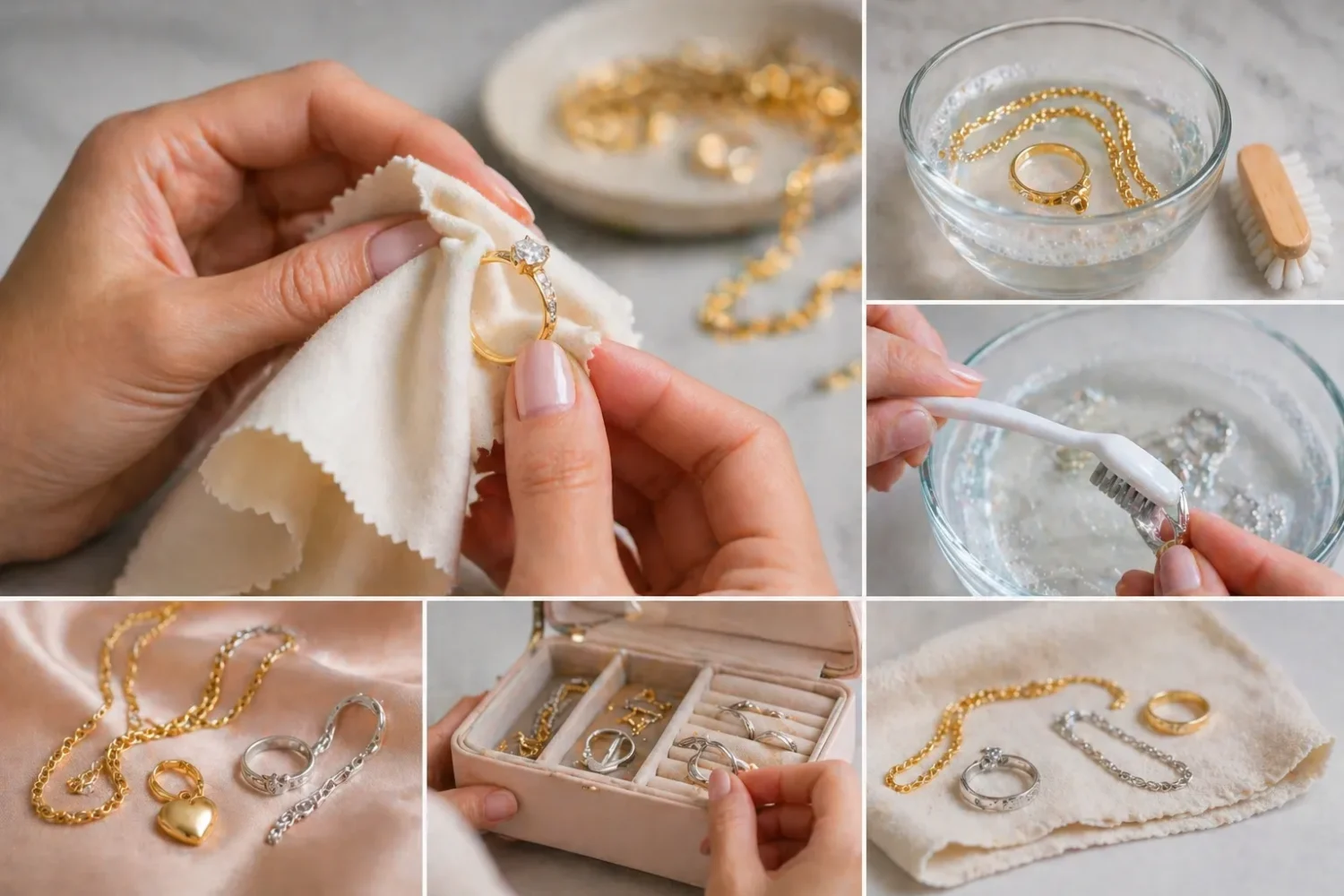
Although different materials require different cleaning methods, mixing a small amount of gentle dish soap with warm water works well for most jewellery types. Next, soak the jewellery for a few minutes and gently brush it with a soft toothbrush. Rinse your jewellery thoroughly and dry it with a soft piece of cloth.
It’s important to note that porous or soft stones, such as opals, pearls, and emeralds, can be easily damaged. Never use harsh chemicals like bleach or ammonia, which can damage them. If you’re unsure how to proceed, investing in professional jewellery cleaning preserves the integrity and beauty of your statement pieces, provides deeper cleaning, and helps identify early signs of deterioration.
Cleaning Gold Jewellery Explained
The cleaning frequency of gold jewellery depends on its usage. We recommend cleaning it every one or two weeks if you wear it daily. If you only wear it occasionally, cleaning it every one to two months is sufficient. Rarely worn or stored pieces must be cleaned every three to six months to prevent dullness.
You can clean your gold jewellery in two ways:
- DIY cleaner: Fill a small bowl with warm water and gentle dish soap. Mix them thoroughly and add your statement pieces one at a time, ensuring that they don’t rub together. Soak your jewellery in the cleaning solution for 10 to 20 minutes.
Next, use a soft-bristled brush or an old toothbrush to scrub any noticeable debris or residue. Remove your jewellery from the cleaning solution, rinse with fresh water, and dry with a soft cotton cloth. Allow your jewellery to dry completely before wearing or storing it.
Avoid using distilled vinegar in cleaning your gold jewellery, as it could cause long-term damage.
- Baking soda paste: Combine a ¼ cup of baking soda with two tablespoons of water. Next, use your fingers or a soft cloth to apply the baking soda paste in circular motions to noticeable debris or residue on your jewellery.
Rinse your gold statement pieces with warm running water. Once the baking soda paste has completely disappeared, dry your jewellery with a soft, lint-free cloth.
Alternatively, you can ask a professional jeweller on the Gold Coast or in your local area to clean your gold jewellery. We strongly recommend professional cleaning if your statement pieces show visible signs of wear and tear, fading, discolouration, or loose, misaligned gemstones.
Cleaning Silver Jewellery Explained
Silver jewellery requires more care than gold because it tarnishes more easily. Everyday wear requires cleaning every one to two weeks. On the other hand, occasional wear requires monthly cleaning, while stored pieces require cleaning every two to three months.
You can clean your silver jewellery in three ways:
- Mild dish soap and water: This is the best method for cleaning frequently-worn silver jewellery, removing skin, oil, lotion, or makeup buildup. Mix mild dish soap with warm (not hot) water. Next, dampen a soft microfibre cloth in the cleaning solution and use it to wipe your silver jewellery.
Use an old toothbrush to gently clean crevices, chain links, and prong areas. Finally, rinse your silver jewellery with clean water and dry it completely. Never leave moisture on your silver statement pieces, as it can tarnish joints and links.
- Polishing cloth: We recommend a polishing cloth specifically tailored for silver jewellery. These cloths are usually made of soft microfibre or cotton and can remove tarnish and restore lustre.
Polish your silver jewellery in light, straight strokes with the cloth. Overpolishing can deteriorate the metal and compromise its aesthetics. Pinch the cloth around a chain and wipe it along its length for efficient cleaning.
- Baking soda paste (only for plain sterling silver): Although baking soda can remove heavier tarnish, it is mildly abrasive. For this reason, we recommend using it only on plain sterling silver jewellery.
First, mix baking soda with several drops of water to create a smooth paste. Use a soft cloth to wipe the mixture gently on your plain sterling silver jewellery. Rinse thoroughly with clean water and let it dry completely.
Avoid using toothpaste, abrasive powders, or paper towels, as these can scratch or damage silver jewellery. On the other hand, chlorine bleach or abrasive cleaning agents can discolour it.
If you’re unsure about the appropriate cleaning method or if heavy, stubborn tarnish has accumulated on your silver jewellery, we recommend hiring a professional jeweller on the Gold Coast or in your local area to clean it and restore its sparkle.
Conclusion
Maintaining the shine of gold and silver jewellery requires consistent care, gentle cleaning practices, and knowing when to seek professional assistance. Although regular cleaning can remove everyday buildup and preserve their brilliance, avoiding harsh chemicals or abrasive techniques is just as important to prevent long-term damage. With the right approach, your gold or silver jewellery can retain its lustre and brilliance over time.
You can trust Finelines Jewellers to retain the elegance of your gold and silver jewellery. As a trusted manufacturer of Gold Coast engagement rings, our meticulous attention to detail and commitment to 100% customer satisfaction deliver guaranteed results. Book an appointment today to experience true jewellery craftsmanship.